

Abigail Knight
Abigail Knight is an Associate Professor in the Department of Chemistry at the University of North Carolina at Chapel Hill. Her research group works at the interface of chemical biology and polymer science, developing protein-mimetic synthetic macromolecules with biomimetic hierarchical structure. Abby completed her PhD at UC Berkeley with Prof. Matthew Francis and her postdoctoral training at UC Santa Barbara with Prof. Craig Hawker. Her group's research aims to engineer synthetic nanomaterials that rival the binding capabilities of proteins, with applications in global health and sustainability. She is a 2024 Sloan Research Fellow and recipient of the NSF CAREER Award.

Alison Edwards
Dr Alison Edwards is the Senior Lecturer in Pharmaceutical Chemistry at the Universities of Greenwich and Kent at Medway.

André Cobb
André is the Director of FoldNetUK and lead investigator of a research group focused on the synthesis and application of new peptidic structures, particularly through the development of new methodologies towards unnatural amino acids.

Andy Wilson
Andy Wilson is a Professor in the School of Chemistry at the University of Birmingham. The Wilson group are interested in the application of synthetic molecules to problems in Chemical Biology and Materials Science. We pursue both curiosity driven fundamental research and mission inspired research addressing societal challenges.

Anna Barnard
Anna is an Associate Professor (Senior Lecturer) in the Department of Chemistry at Imperial. Her research focuses on the development of peptides and small molecules to understand and perturb protein-protein interactions.

Ian Hamley
Professor Ian Hamley is Diamond Professor of Physical Chemistry in the Department of Chemistry at the University of Reading.

James Hindley
Research in the Hindley group takes a multidisciplinary approach to construct bioinspired nano and microsystems known as synthetic cells. By utilising molecular self-assembly, and interfacing compartments with other (bio)molecules, synthetic cells can be constructed with the ability to mimic the architectures, functions and behaviours of biology.

Jonathan Clayden
Jonathan leads a synthetic chemistry group with expertise in design/applications of amide and urea-based with controlled but dynamic conformational properties.

King Hang Aaron Lau
Aaron leads his group in Bioinspired Molecular Interfaces in the Department of Pure and Applied Chemistry at the University of Strathclyde. He takes an interdisciplinary approach based on molecular engineering and biophysical chemistry to pioneer peptides and peptide-mimetic “peptoids” with precise molecular functionalities for antimicrobials, self-assembly, and biomedical applications. He also develops plant-based polyphenol-biopolymer composites as coatings and sustainable materials, and he frequently engages with industry in both consultancies and collaborative projects. Aaron obtained his PhD at the Max Planck Institute for Polymer Research, Germany, and postdoctoral training at Northwestern University, USA. His awards include an US NIH National Research Service Award and a Human Frontier Science Program (HFSP) Young Investigator award. Among various engagements, Aaron is Co-Director of the Strathclyde’s Leverhulme Doctoral School in Nature Inspired Acoustics responsible for materials development, and he serves as secretary of the Royal Society of Chemistry Glasgow and West of Scotland section.
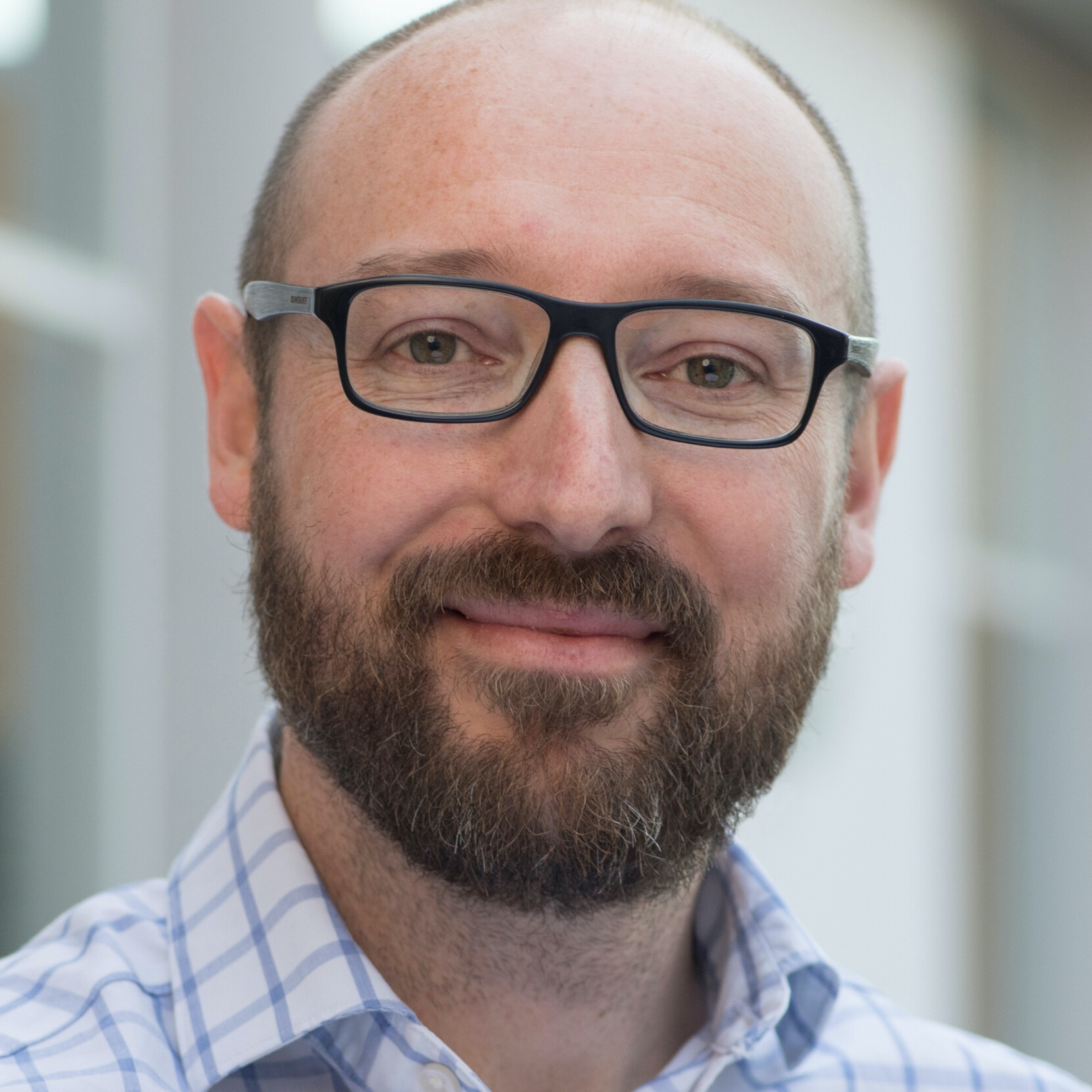
Nicholas Mitchell
Nick's group focuses on the development of new bioconjugation methodologies. Current projects include the exploration of photocatalytic, biocatalytic, and electrochemical methods for the site-selective modification of peptides and proteins.

Peter Knipe
Peter is a synthetic organic chemist with a group focused on developing synthetic methodologies, and developing new foldamer motifs. The Knipe Group are particularly interested in precise control of conformation by non-covalent interactions, stereoelectronic effects and monomer structure.

Sam Thompson
Thompson Group research focuses on structure guided rational design to synthesise molecules that address problems in biology, medicine and materials. The research programme includes:
Protein-protein interaction inhibition
Tools to interrogate protein misfolding conditions
Abiotic foldamers: programmable 3D architectures

Steven Cobb
Steven is the Director of the Biophysical Sciences institute and his research group uses a range of methods and techniques in synthetic organic, peptoid and peptide chemistry to tackle interesting and challenging biological problems.
Join the UK Foldamer Network
To engage with all the exciting opportunities and events this network has to offer, please register now. It’s quick and easy.